Why Does Nasal Obstruction Persist After Septoplasty?
Importance of diagnosing nasal valve collapse, mucosal adhesions, and turbinate hypertrophy
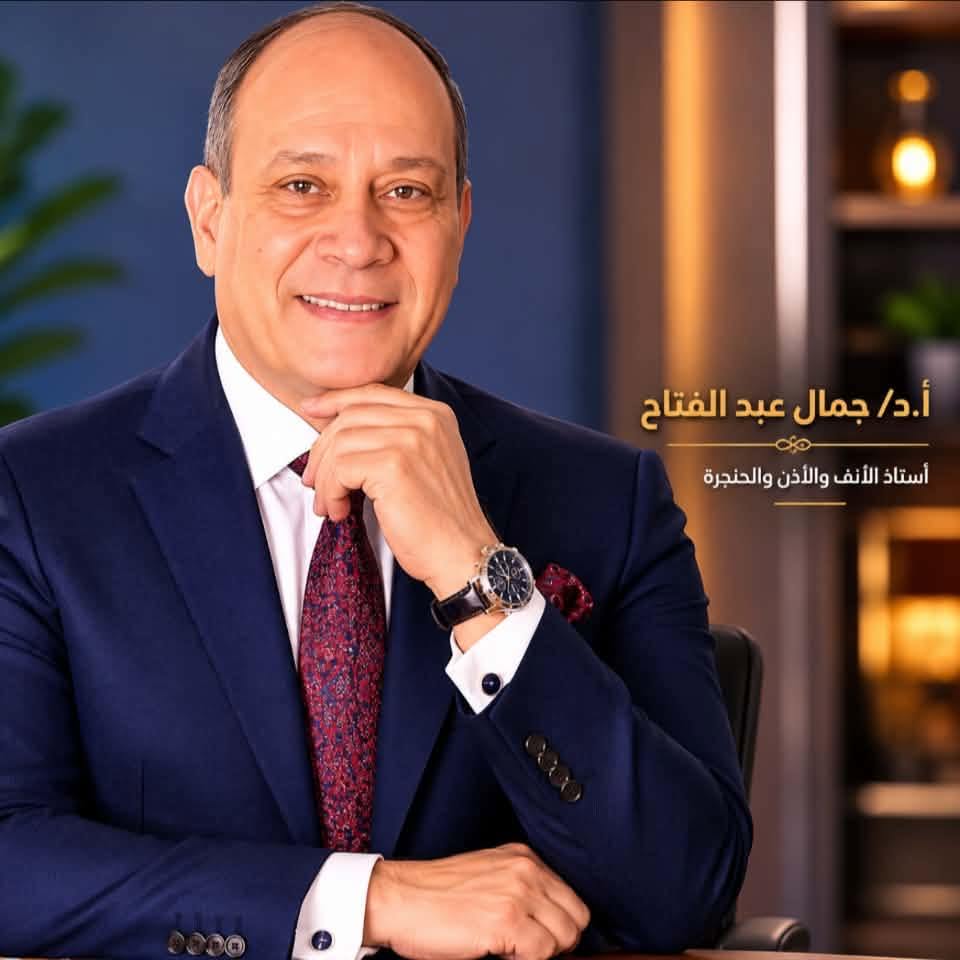
Prof. Dr. Gamal Abdel Fattah
Professor of Otorhinolaryngology, Head & Neck Surgery - Cairo University, Fellow of Royal College of Surgeons (DOHNS)
Key Takeaways & Patient Summary
Persistent nasal obstruction following septoplasty does not necessarily imply a surgical failure; it frequently highlights unaddressed dynamic factors such as nasal valve collapse.
Compensatory or inadequately managed inferior turbinate hypertrophy represents a leading mechanical cause of persistent nasal airway resistance.
Postoperative synechiae (mucosal scarring/adhesions) can significantly obstruct airflow but can be cleanly released through precise, outpatient endoscopic care.
High-resolution functional dynamic endoscopy is the gold standard to pinpoint the exact structural cause and formulate an individualized corrective protocol.
What Happens Inside Your Body?
Undergoing septoplasty with high hopes for effortless breathing only to experience persistent nasal blockage is a deeply frustrating experience for many patients.
The nasal airway is not merely a static central partition; it is an intricate, dynamic aerodynamic conduit.
When surgical correction focuses exclusively on the cartilaginous or bony septum while overlooking the nasal valve, the narrowest segment of the entire respiratory tract, the negative pressure generated during normal inhalation causes the lateral nasal walls to collapse inward.
Furthermore, inferior turbinates often undergo compensatory hypertrophy, or fragile mucosal synechiae (post-surgical adhesions) form between opposing healing tissues.
These mechanical and dynamic factors severely constrict airflow, resulting in chronic fatigue, dry mouth, and unrefreshing sleep.
Peer-Reviewed Clinical Benchmark
Improvement in Nasal Obstruction and Quality of Life after Nasal Septoplasty with Turbinoplasty: A Pre- and Post-study
Clinical outcome data demonstrated that combining anatomical septoplasty with tailored turbinoplasty produces an outstanding reduction in subjective nasal airway obstruction, achieving greater than an 85% success rate on standardized NOSE metrics and markedly superior sleep quality compared to isolated septal correction.
DOIView Original Benchmark Study (DOI)"Persistent nasal blockage following septoplasty is neither an incurable dilemma nor a personal failure. The nasal passages are dynamically responsive; once we accurately pinpoint nasal valve mechanics and mucosal health, an individualized, minimally invasive solution reliably restores calm, uninterrupted breathing."
—Prof. Dr. Gamal Abdel Fattah — Professor of Otorhinolaryngology, Head & Neck Surgery
Cairo University, Fellow of Royal College of Surgeons (DOHNS)Modern Diagnostic Precision Without Discomfort
Resolving persistent airway obstruction begins with comprehensive, patient-centered diagnostic evaluation far beyond conventional anterior rhinoscopy.
In our clinical practice, we utilize high-definition rigid and flexible video endoscopy, which is performed in a matter of minutes using gentle topical anesthesia with zero pain.
This enables meticulous visualization of the entire nasal vault, identifying hidden synechiae, subtle posterior deviations, and soft-tissue hypertrophies.
We concurrently perform the dynamic modified Cottle maneuver and quantitative nasal airflow evaluations to systematically assess internal and external nasal valve collapse, occasionally supported by targeted low-dose 3D cone-beam CT imaging to map structural airway geometry.
Advanced Treatment Protocols & Targeted Interventions
Therapeutic strategies are meticulously tailored based on objective diagnostic findings, prioritizing the least invasive yet most definitive options.
When chronic mucosal hypersensitivity is a primary contributor, specialized medical protocols restore mucosal ciliary equilibrium.
If postoperative mucosal adhesions (synechiae) are identified, they are painlessly divided under local anesthesia with dissolving spacers to permanently prevent recurrence.
For anatomical valve weakness or persistent turbinate enlargement, precision techniques such as autologous cartilaginous spreader grafts/flaps and low-temperature radiofrequency turbinate volume reduction are applied, safeguarding mucosal physiology without altering external facial identity.
Post-Care Recovery & Long-Term Quality of Life
Modern revision techniques deliberately avoid cumbersome, painful packing, allowing patients to be discharged the same day and resume everyday routines within 48 to 72 hours.
Guided by gentle isotonic saline irrigation and mucosal hydration regimens during the initial two weeks, tissue swelling swiftly subsides.
Patients experience profound improvements: elimination of morning dry throat, significant reduction in snoring and micro-arousals, and full, refreshing air passage during physical exercise, culminating in enhanced daytime vitality and restorative sleep.
Frequently Asked Questions
While early mucosal swelling occurs in the first month, persistent obstruction at two months warrants high-resolution endoscopic assessment to identify dynamic nasal valve collapse, compensatory turbinate hypertrophy, or subtle mucosal adhesions.
The nasal valve is the narrowest anatomical aperture of the airway. If its supporting cartilages are structurally weak, the negative pressure of inhalation draws the side of the nose inward, blocking airflow regardless of how straight the septum is.
No. Most synechiae are thin, membranous adhesions that can be gently and painlessly released in the office under light topical anesthesia in a brief 10-minute outpatient procedure.
Functional valve reconstruction is specifically engineered to stabilize internal airflow mechanics through concealed internal incisions, intentionally preserving your natural facial and nasal aesthetics.
Desk work and standard daily activities can typically be resumed within 48 to 72 hours. Light walking is safe after one week, whereas rigorous gym workouts or heavy lifting are usually reintroduced after 2 to 3 weeks.
Peer-Reviewed Scientific Sources & Journal References
Empirical clinical trials and peer-reviewed medical publications referenced by Prof. Dr. the specialist:
Improvement in Nasal Obstruction and Quality of Life after Nasal Septoplasty with Turbinoplasty: A Pre- and Post-study
Clinical Outcome: Demonstrated that combining septoplasty with turbinate reduction significantly enhances NOSE score outcomes and sleep quality in over 85% of patients compared to single-modality correction.
Unique Features of Nasal Airway and Airflow Improvement Post-Dupilumab: A Computational Cohort Study
Clinical Outcome: Utilized computational fluid dynamics to show that mucosal inflammatory changes significantly contribute to nasal resistance even after anatomical correction, highlighting the synergy of medical and surgical care.
Why Does General QoL Tend to Worsen Over Time Following Septoplasty Even in the Absence of Worsening Nasal Symptoms?
Clinical Outcome: Indicated that neglecting chronic mucosal hypersensitivity and subtle upper airway resistance over time undermines overall quality of life despite initial anatomical septal straightening.
Prof. Dr. Gamal Abdel Fattah
Professor of Otorhinolaryngology, Head & Neck Surgery - Cairo University, Fellow of Royal College of Surgeons (DOHNS)
Other Clinical Guides by the Author
The Hidden Link: How Snoring and Sleep Apnea Impact Heart Health & Blood Pressure
Does Hearing Improve After Eardrum Repair Surgery?
Difference Between Bacterial, Fungal, and Allergic Sinusitis
The Truth About the White Membrane After Tonsillectomy in Children